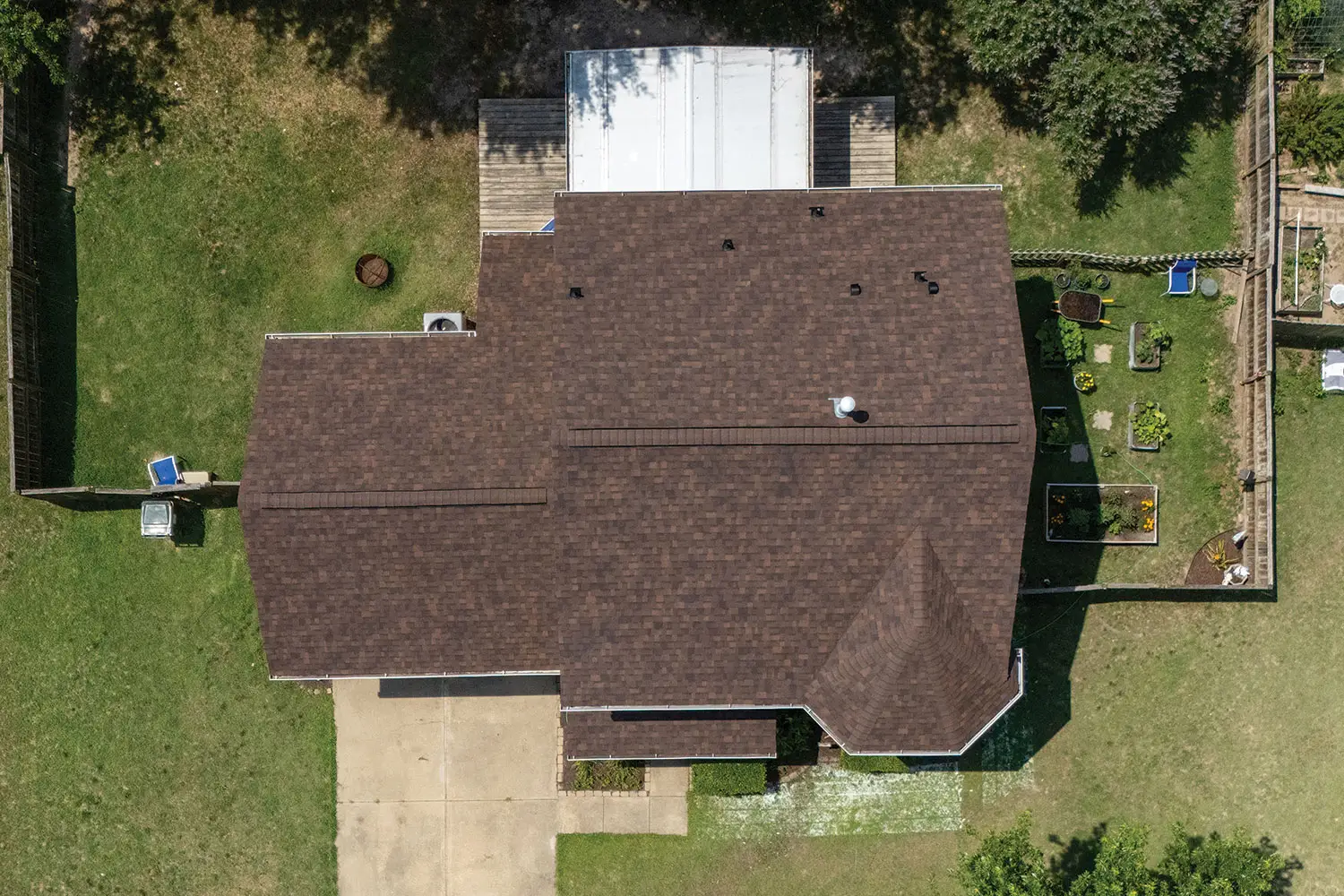
Two roofers look at the same roof. One says it needs an $800 repair. The other says the whole thing has to come off. Both of them sound confident, and both of them want you to sign something today. If that has happened to you, you already know why roof repair vs roof replacement is one of the most frustrating calls a homeowner has to make, and one of the most expensive to get wrong.
Bucon Roofing is a Class A licensed and insured residential roofing contractor based in Windsor, Virginia, and our crews inspect roofs all over Hampton Roads. What follows is the same framework we use in the field, laid out so you can look at your own situation and understand what a good contractor should be telling you. Repair and replacement are both legitimate answers. The trick is knowing which one your roof is actually asking for.
Key Takeaways
- Repair usually wins when damage is localized and the rest of the roof still has real service life left. A cracked pipe boot on a 9-year-old roof is a repair, full stop.
- Replacement usually wins when the failure is systemic. Widespread granule loss, brittle shingles across whole slopes, soft decking, or leaks showing up in three different places are signs the roof is done as a system.
- Age alone does not decide it, and neither does a single leak. The decision is a combination of age, how much of the roof is affected, the condition of the wood decking underneath, how many layers of roofing are already up there, and how long you plan to stay in the home.
- Virginia building code limits how many layers of roofing can be stacked on a house. If your roof already has two applications of roof covering, a recover is off the table and a tear-off is required.
- Hampton Roads weather changes the math. Wind-driven rain, tropical systems, salt air, and long humid summers put stress on roofs that homeowners in drier inland markets do not deal with.
- Insurance coverage is decided by your carrier and your policy, not by your roofer. A roofing contractor can inspect, document, and explain what was found. Approval is not ours to give.
- The most expensive mistake is guessing. A real inspection, including the attic side, costs you nothing with us and settles the question with evidence instead of opinion.
Table of Contents
Roof Repair vs Roof Replacement: The Short Answer
Here is the cleanest way to think about it. Your roof is not a single product. It is a system made of layers that all depend on each other:
- Decking. The plywood or OSB sheathing nailed to your rafters. This is the structural surface everything else attaches to.
- Underlayment. The water-resistant layer rolled over the decking. It is your secondary defense when wind pushes rain under a shingle.
- Flashing. Metal pieces that seal the transitions where the roof meets something else, like a chimney, a wall, a valley, or a skylight.
- Penetrations. Pipe boots, vents, and anything else poking through the roof surface. These are the most common leak points on a residential roof.
- Roof covering. The shingles or panels you can see from the street.
- Ventilation. Intake at the soffits and exhaust at the ridge, which keeps the attic from cooking your shingles from underneath.
A repair fixes a failed component. A replacement resets the entire system. So the real question is not “is my roof leaking.” The question is whether the failure is confined to one component while the rest of the system still has useful life, or whether the system as a whole has run out of road.
A roofer who answers that question without getting on the roof and into your attic is guessing. That is the part homeowners tend to underestimate.
When a Roof Repair Is the Right Call
Plenty of roofs we look at do not need to be replaced, and we say so. Roof repair is usually the smarter move when most of these are true:
- The damage is confined to a defined area. One slope, one valley, one wall intersection, one section that took a hit from a limb.
- The roof is in the first half to two thirds of its service life. A 7-year-old architectural shingle roof with a leak has a lot of life left. That leak is a symptom, not a death sentence.
- The decking is dry and solid. If we can walk the roof without feeling soft spots and the attic side shows clean, dry sheathing, the bones are fine.
- The shingles are still flexible and holding granules. Healthy shingles bend without cracking. Brittle ones snap.
- The problem is a flashing or penetration failure. This is the big one. A large share of the leaks we chase down are not the shingles failing at all. They are cracked rubber pipe boots, rusted or improperly installed step flashing along a wall, a chimney counterflashing that pulled loose, or a nail that backed out and lifted a shingle. Those are targeted fixes.
- There is only one layer of roofing on the house. That keeps your options open.
One item deserves special attention in our area: the rubber pipe boot. These are the collars around the plumbing vent pipes on your roof. The rubber gasket dries out and splits from years of UV exposure and heat cycling, often well before the surrounding shingles wear out. The homeowner sees a ceiling stain and assumes the roof is shot. Frequently it is a component that can be replaced in an afternoon. Worth checking before you start pricing a new roof.
When a Roof Replacement Is the Right Call
On the other end, there are conditions where a repair is just money you will spend twice. Roof replacement is generally the honest recommendation when we see:
- Widespread granule loss. Granules are the colored mineral surface embedded in asphalt shingles. They are not decorative. They shield the asphalt from UV. When granules wash off across whole slopes and you are finding piles of them in your gutters and at the bottom of your downspouts, the asphalt is exposed and aging fast.
- Cracking, curling, or clawing across multiple slopes. Shingle edges lifting or the shingle body cracking is a sign the asphalt has dried out. That is not fixable in patches.
- Leaks in multiple, unrelated locations. One leak is a problem. Three leaks in three different areas of the house is a pattern, and patterns point to system failure.
- Soft, delaminated, or rotted decking over a broad area. Once the wood underneath is compromised in more than isolated spots, you are rebuilding the roof anyway.
- Two or more existing layers of roofing. This one is not a judgment call, it is code. The Virginia Residential Code, Chapter 9 does not permit a roof recover where the existing roof already has two or more applications of any type of roof covering, or where the existing roof covering is water soaked or has deteriorated to the point that it is no longer an adequate base. If you have got two layers up there, the next roof is a full tear-off.
- You have already paid for repairs two or three times in the last few years. Add those invoices up. At some point you are financing a replacement in installments and still living with an old roof.
- The roof is at or past the end of its expected service life. Service life is not a guarantee and it varies with material quality, installation, ventilation, and exposure. But an old roof that is actively failing is not a repair candidate.
There is also a practical issue that catches people off guard: matching. Shingle lines get discontinued, and even an identical product will not match a roof that has been fading in the Virginia sun for fifteen years. A repair on an aged roof often looks like a repair. If curb appeal matters because you are about to sell, factor that in.
The Five Questions That Actually Decide It
When homeowners ask us “should I repair or replace my roof,” this is the checklist we walk through with them. You can run it yourself before anyone gives you a number.
1. How old is the roof, and what is it made of?
Pull the closing documents or ask the previous owner. Three-tab shingles, architectural shingles, metal, and low-slope membrane all age differently. A roof in year 6 and a roof in year 24 are not the same conversation even if the symptom looks identical.
2. How much of the roof is actually affected?
Not how much looks bad from the ground. What percentage of the roof surface shows failure when someone walks it? Ten percent is a repair discussion. Sixty percent is not.
3. What is the decking doing?
This is the question most homeowners never ask, and it is the one that changes projects. Wet or rotted sheathing has to be replaced regardless of which route you take. It also tells you how long water has been getting in.
4. How many layers are up there?
A roofer can check this at the rake edge or at a vent penetration in about thirty seconds. It determines whether a recover is even legal on your house and it affects tear-off cost.
5. How long do you plan to own the home?
This is a legitimate factor and any contractor who ignores it is not paying attention. If you are moving in eighteen months and the roof has genuine life left, a proper repair may be exactly right. If this is your forever home and the roof is on the back half of its life, spending on repairs to defer the inevitable rarely pencils out.
What Hampton Roads Weather Does to a Roof
Roofs in southeastern Virginia get worked harder than roofs in a lot of the country, and it shows up in specific ways.
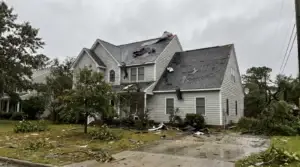
Tropical systems and wind-driven rain. According to NOAA, the Atlantic hurricane season runs from June 1 to November 30, and the climatological peak falls around September 10, with most activity between mid-August and mid-October. Living in Windsor, Smithfield, Suffolk, or anywhere along the water, you do not need a landfalling hurricane to have a roofing problem. A tropical system passing offshore can deliver hours of sustained wind and sideways rain, and that is a very different load than a normal thunderstorm. Wind-driven rain gets under shingle courses and finds any flashing that was installed poorly.
Wind damage you cannot see from the ground. This is the one that costs people money. Wind does not always tear shingles off. More often it breaks the factory sealant strip that bonds each shingle to the one below it, or it creases the shingle when it lifts and folds back. From the driveway, the roof looks untouched. The shingle is now unsealed and every future storm gets underneath it. Creased shingles frequently fail months later, long after the storm everyone remembers.
Heat and humidity. Long humid summers combined with an under-ventilated attic will cook shingles from the underside and shorten their service life. This is why we look at soffit intake and ridge exhaust during an inspection. Poor ventilation also shows up as condensation on the underside of the decking in winter, rusted nail shanks, and damp insulation, which homeowners often mistake for a roof leak.
Algae streaking. Those dark vertical streaks on north-facing slopes are algae growth, and our humidity feeds it. Homeowners regularly call about it thinking the roof is rotting. In most cases it is a cosmetic issue, not a structural one, and it is not a reason to replace a roof by itself.
Coastal exposure. Homes closer to the water deal with salt-laden air, which is harder on metal components like flashing, drip edge, and fasteners than it is on the shingles themselves. Flashing that would last decades inland may need attention sooner near the coast.
Roof Repair vs Replacement Cost: How to Think About the Money
We are not going to publish a price chart, because any roofer quoting you a number without seeing your house is making it up. What we can do is lay out exactly what drives the number so you can read an estimate intelligently.
What drives replacement cost:
- Size. Roofing is measured in squares. One square equals 100 square feet of roof surface.
- Pitch. Steeper roofs are slower and require more safety equipment, so labor goes up.
- Complexity. Valleys, dormers, skylights, chimneys, and multiple rooflines all add flashing work and cut-up waste.
- Layers to remove. Tearing off two layers costs more than one in both labor and disposal.
- Decking replacement. Nobody knows how much rotted sheathing is under there until the old roof comes off. A good estimate states a per-sheet price up front so there are no surprises.
- Material selection. Shingle grade, metal versus asphalt, and the accessory components make a real difference.
- Access. Where the truck and dumpster can sit, and how far material has to be carried.
What drives repair cost: mainly how hard the leak is to find, whether the repair area is accessible, and whether decking has to come out.
The useful way to compare them is not repair price versus replacement price. It is cost per year of roof life purchased. Spending $1,200 to get eight more good years out of a roof is a strong return. Spending $1,200 to get eighteen months on a roof that is visibly failing across every slope is not, and you will spend it again.
If a replacement is the right answer but the timing is difficult, that is a normal situation and worth saying out loud during the estimate. Bucon Roofing offers financing options for qualified homeowners, which sometimes makes the difference between doing the job right and patching a roof for another two seasons.
Storm Damage and Insurance: What Actually Happens
This is where homeowners get the most bad information, so it is worth being precise about it.
Your insurance carrier decides coverage. Your policy defines it. A roofing contractor does not. Anyone who tells you they can get you a free roof, or guarantees your claim will be approved, is telling you something they have no authority to promise. Walk away from that conversation.
What a qualified contractor can legitimately do is inspect the roof, identify and photograph what is there, and provide clear professional documentation of the damage and the scope of work required. That documentation may support a claim you choose to file. Whether the claim is approved, what your deductible is, and how your policy handles depreciation are all between you and your carrier. Bucon Roofing provides insurance claim documentation assistance in that supporting role. We do not represent your insurance company, and we do not act as a public adjuster.
A few things that genuinely help homeowners in this process:
- Know your date of loss. Claims are tied to a specific weather event. Note the date of the storm.
- Do not wait. Policies typically contain time limits for reporting damage, and a leak that sits gets worse and muddies the picture of what caused what. Read your policy or call your agent.
- Read your declarations page. Look at your deductible, whether there is a separate wind or hurricane deductible, and whether roof losses are settled at replacement cost or actual cash value. Those terms materially change what you receive. Your agent can walk you through it.
- Document before you cover anything. Photograph interior and exterior damage before emergency repairs. Then protect the house. Bucon Roofing offers emergency roofing services when a roof needs to be secured quickly to stop water intrusion.
- Understand the wear-and-tear distinction. Policies generally treat sudden accidental damage differently from gradual deterioration. This is a common reason claims get denied, and it is another argument for having a roof properly inspected after a storm rather than years later.
If a named storm or a strong wind event has come through, a professional storm damage inspection gives you a factual record of the condition of your roof. That is valuable whether you end up filing or not.
Why a Real Inspection Beats a Guess From the Driveway
Everything above depends on accurate information about your roof. Here is what a thorough roof inspection should include, so you know whether you are getting one.
On the roof: a walk of every accessible slope, checking shingle flexibility and granule coverage, testing seal strips for wind damage, examining every valley, inspecting all flashing at chimneys, walls, and skylights, checking pipe boots and vents, and feeling for soft spots that indicate compromised decking.
In the attic: this is the half most homeowners never get. From underneath, we look for daylight through the decking, water staining on rafters and sheathing, damp or matted insulation, mold growth, rusted nail points from condensation, and whether the ventilation is actually functioning. The attic tells you how long a problem has been going on, which the roof surface often will not.
Around the house: gutters and downspouts for granule accumulation, fascia and soffit condition, and any interior ceiling or wall staining.
Documentation: photos of what was found, tied to specific locations, and a written explanation of the options with the reasoning behind the recommendation.
Two things to verify about whoever does this work. First, that they are licensed. Virginia issues contractor licenses in three classes, and you can confirm any Virginia contractor’s license status through the Department of Professional and Occupational Regulation before you sign anything. Bucon Roofing holds a Class A license, the highest of the three. Second, that they are insured, and that they will give you a certificate of insurance rather than just saying so.
Red Flags to Watch For When You Get Estimates
After a storm rolls through Hampton Roads, out-of-town crews show up. Some are fine. Many are not. Here is what should make you slow down:
- Pressure to sign today. A legitimate estimate is still good tomorrow. Urgency is a sales tactic, not a roofing condition.
- Any promise of a free roof or a guaranteed claim approval. Covered above. Not theirs to promise.
- A recommendation to replace with no photos and no attic inspection. If they cannot show you what they saw, they may not have looked.
- A verbal scope of work. Get the shingle product, underlayment, ice and water shield locations, flashing details, ventilation, decking replacement rate, cleanup, and permit responsibility in writing.
- Asking for a large deposit up front. Be cautious, and never pay in cash without documentation.
- No local address and no verifiable license. If they cannot be found in ninety days when you have a question, the warranty conversation is theoretical.
- Offering to cover or waive your deductible. This should end the conversation.
The flip side is worth saying too. A contractor who tells you your roof does not need to be replaced, and explains why, is showing you exactly what they will be like to work with when you do need a bigger job.
Frequently Asked Questions
Can you repair just one section of a roof?
Yes, and it is done all the time. Localized repairs work well when the surrounding shingles are still sound and flexible enough to lift without cracking. The two limitations are matching, since aged shingles will not match new ones exactly, and diminishing returns, since patching a roof that is failing broadly just moves the leak somewhere else.
How do I know if my roof has storm damage if I cannot see anything from the ground?
You often cannot, and that is the point. The most common wind damage is a broken sealant strip or a creased shingle, neither of which is visible from the yard. That is why a post-storm inspection matters even when the roof looks normal. Damage that goes unaddressed frequently shows up as a leak months later.
Is it cheaper to repair or replace a roof?
A repair is almost always cheaper in the moment. Whether it is cheaper over the next ten years depends on how much roof life you are actually buying. Compare the cost against the years of service it realistically adds, and add up what you have already spent on previous repairs.
How long should a roof last in Hampton Roads?
Service life depends on the material, the quality of the original installation, how well the attic is ventilated, and how exposed the home is to wind and sun. No honest roofer can give you a guaranteed number for a roof they have not inspected. Manufacturer warranty periods describe coverage terms, not a promise of how long a specific roof on a specific house will last.
Does homeowners insurance pay for a roof replacement?
Sometimes, and only your carrier can answer it for your policy. Coverage generally depends on the cause of the damage, when it occurred, your deductible, and how your policy handles roof losses. A contractor can document the damage professionally, but the coverage decision belongs to the insurance company.
Should I replace my roof before selling my house?
It depends on the roof’s condition and what your agent is seeing in your market. An aging but functional roof may be handled through price negotiation. A roof with active leaks or visible failure will surface in the buyer’s inspection regardless, so it is better to know where you stand before you list. A documented inspection gives you something factual to negotiate with.
Do I need a permit to replace my roof in Virginia?
Permit requirements are set by your local building department and vary by locality and scope of work. A licensed local contractor should know the requirements for your jurisdiction and handle it as part of the project. Confirm in writing who is pulling the permit before work begins.
Get a Straight Answer About Your Roof
If you are stuck between repairing and replacing, the fastest way out of it is to have someone qualified actually look. We will walk the roof, check the attic, photograph what we find, and tell you what we would do if it were our house. Sometimes that means a repair. Sometimes it means a replacement. Either way you will get the reasoning, in writing, with pictures.
Bucon Roofing is a Class A licensed and insured residential roofing contractor based in Windsor, Virginia, serving homeowners throughout Hampton Roads and southeastern Virginia.
Schedule your free roofing estimate with Bucon Roofing and get a clear answer instead of a guess.