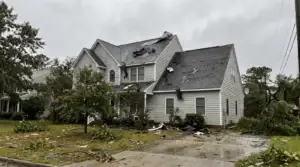
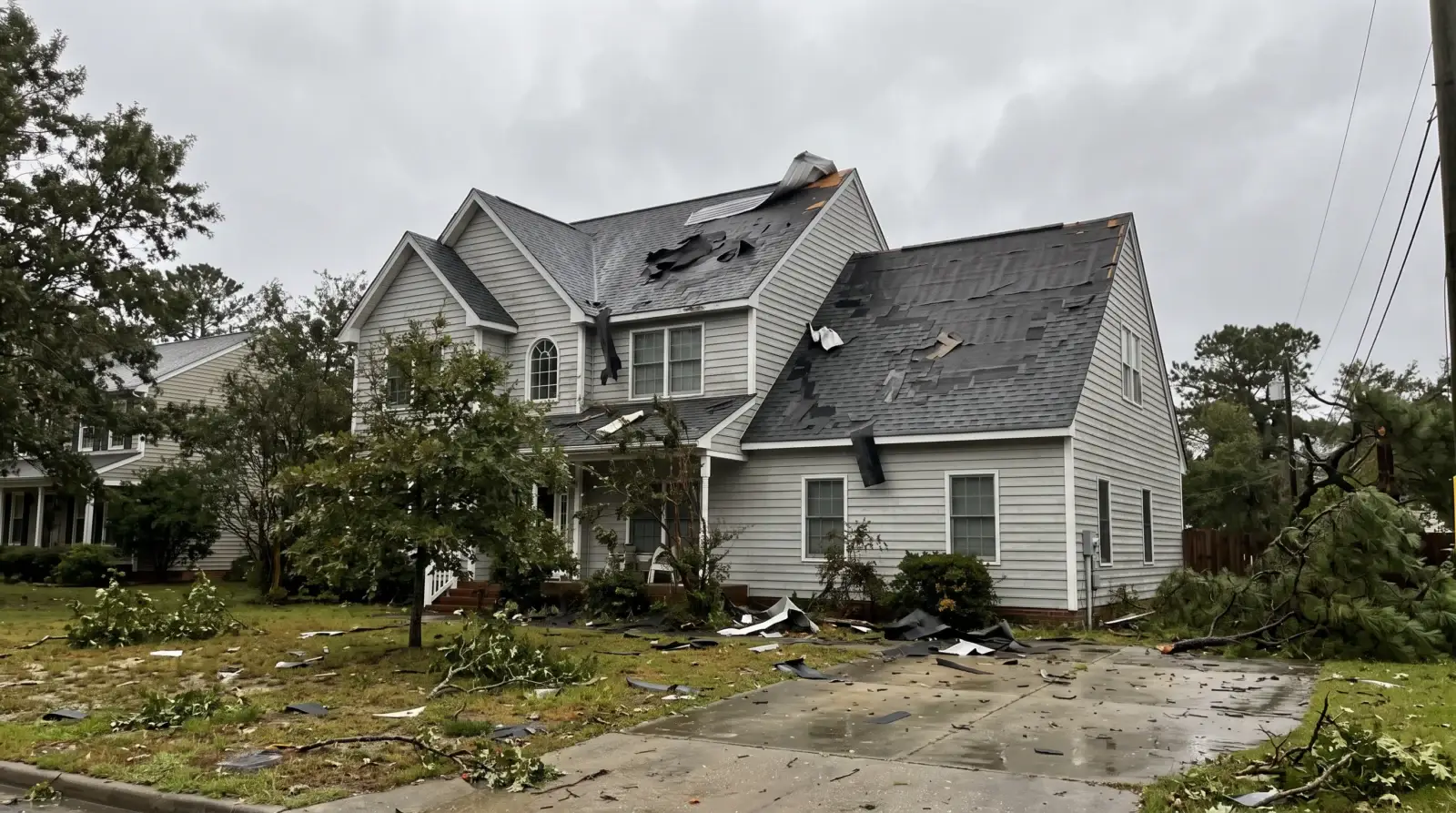
A tree limb comes through the roof during a nor’easter. You walk out after a summer storm and find shingles scattered across the yard. Or a brown ring shows up on the back bedroom ceiling and you have no idea how long it has been there. The question is always the same: will insurance pay for this, and what do I have to do?
Coverage depends on your policy, the cause of the damage, and how well that damage gets documented. Nobody can promise you a check. What we can tell you is that the roof insurance claims process in Virginia follows a predictable path, and homeowners who understand it before they call their carrier have a much smoother time than those who figure it out as they go. We inspect roofs across Hampton Roads every week and sit in on a lot of adjuster appointments. Here is how it actually works.
Key Takeaways
- Policies generally cover sudden, accidental damage from a covered peril like wind, hail, lightning, or a falling tree, not wear, age, or deferred maintenance.
- Whether your policy pays actual cash value or replacement cost value affects your settlement more than any other single factor.
- Many coastal Virginia policies carry a separate wind or hurricane deductible, often a percentage of your dwelling coverage rather than a flat amount.
- Virginia regulation sets specific deadlines your insurer must meet to acknowledge your claim, keep you updated, and give you a written decision.
- Your carrier decides coverage. Under Virginia law, only a licensed public adjuster or an attorney can prepare, file, or negotiate a claim on your behalf.
What Insurance Covers on a Roof
Most standard policies are built around a sudden and accidental loss. Something happened on a specific date that caused specific damage. That framework drives the entire claim.
Damage that typically falls inside it includes wind damage such as lifted, creased, or missing shingles and loose ridge caps; hail damage, including bruising and granule loss that compromises a shingle even when it looks fine from the driveway; falling limbs and debris; lightning and fire; and wind-driven rain entering through an opening the storm created.
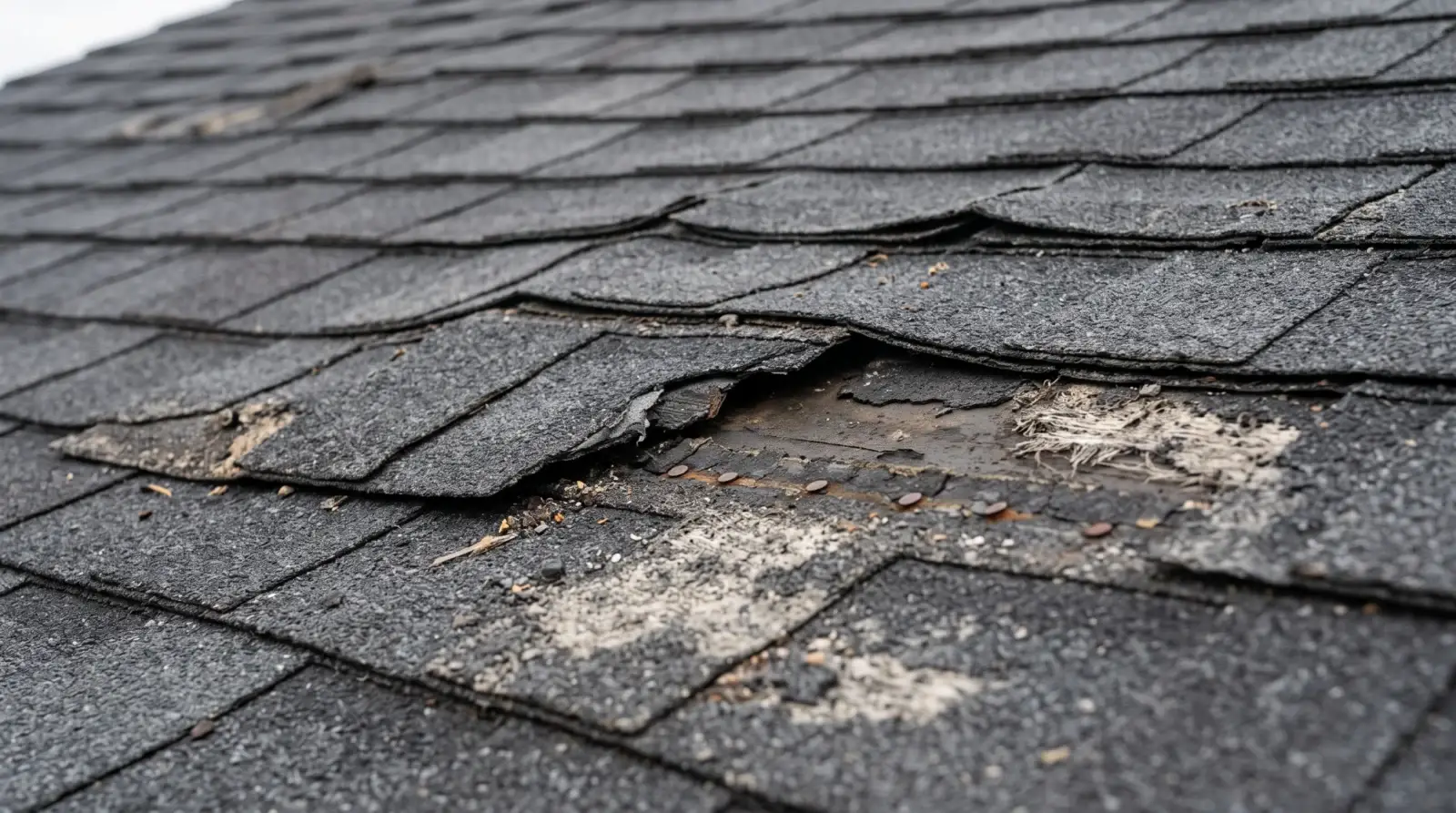
Damage that typically falls outside it includes normal wear and tear, shingles that have reached the end of their service life, damage traced to a lack of maintenance, and manufacturing defects, which are a warranty matter rather than an insurance matter.
One exclusion catches Hampton Roads homeowners off guard every hurricane season. The Virginia Bureau of Insurance is direct about it: standard homeowners policies issued in Virginia typically do not cover damage from floods, surface water, or storm surge. Flood coverage is a separate policy. So the wind versus water distinction is not academic if you live in Chesapeake, Norfolk, or along the water in Isle of Wight County. Rain blowing in through a hole the wind opened is generally handled as wind damage. Water coming up from the ground is flood.
Your policy also has a section titled “Duties After Loss” spelling out what you owe the carrier, including prompt notice and reasonable steps to prevent further damage. If a storm has opened up your roof, emergency tarping and temporary repairs are part of meeting that obligation. Keep the receipts.
What Your Policy Pays, and What You Pay
Two homeowners on the same street can have identical damage and wildly different checks. Two policy terms explain most of the gap.
Replacement cost value (RCV) pays what it costs today to replace the roof with materials of like kind and quality, without subtracting for age. Actual cash value (ACV) pays replacement cost minus depreciation, which accounts for the service life the roof had already used up. On a roof well into its second decade, that can take a serious bite out of the settlement. Your declarations page says which applies, and some carriers add a separate roof schedule that shifts older roofs onto actual cash value even when the rest of the dwelling is covered at replacement cost.

On a replacement cost policy, payment arrives in two parts. The first check is the actual cash value. The second releases the withheld amount, called recoverable depreciation, after the work is completed and you submit documentation of what was done and what it cost. This trips people up constantly. Homeowners see the first check, assume it is the whole settlement, and conclude they cannot afford the job when the rest is sitting there waiting on a final invoice.
Then there is your deductible, which comes off the top. Coastal Virginia adds a wrinkle here. The Bureau of Insurance notes that special wind or hurricane deductibles are applied separately from any other deductible on the policy, and may be written as a flat amount, such as $1,000, or as a percentage of the insurance coverage on the dwelling. The Bureau’s own example: a hurricane causes $3,000 in damage to a house insured for $100,000. With a 2 percent hurricane deductible, the deductible is $2,000 and the company pays $1,000. That percentage runs off your dwelling coverage limit, not the size of the loss, which is exactly why it surprises people.
Wind and hurricane deductibles also differ. A hurricane deductible is narrower, generally tied to a named storm. A wind deductible can be triggered by a thunderstorm, a tropical storm, or a hurricane. Two policies can look nearly identical and behave very differently in September. Find yours before the season peaks, because once a storm is developing offshore it becomes difficult to change coverage. The Virginia SCC consumer guide on what to do after an insured homeowners loss walks through both.
The Claims Process, Step by Step
1. Stop further damage. If water is coming in, get it tarped or dried in. Move furniture, photograph everything first. Your policy expects you to mitigate. It does not expect you to climb on a wet roof.
2. Document before anyone touches anything. Wide shots of every elevation, close-ups of missing or lifted shingles, debris in the yard, dented gutters, damaged siding, interior staining. Note the storm date. Your phone timestamps photos automatically.
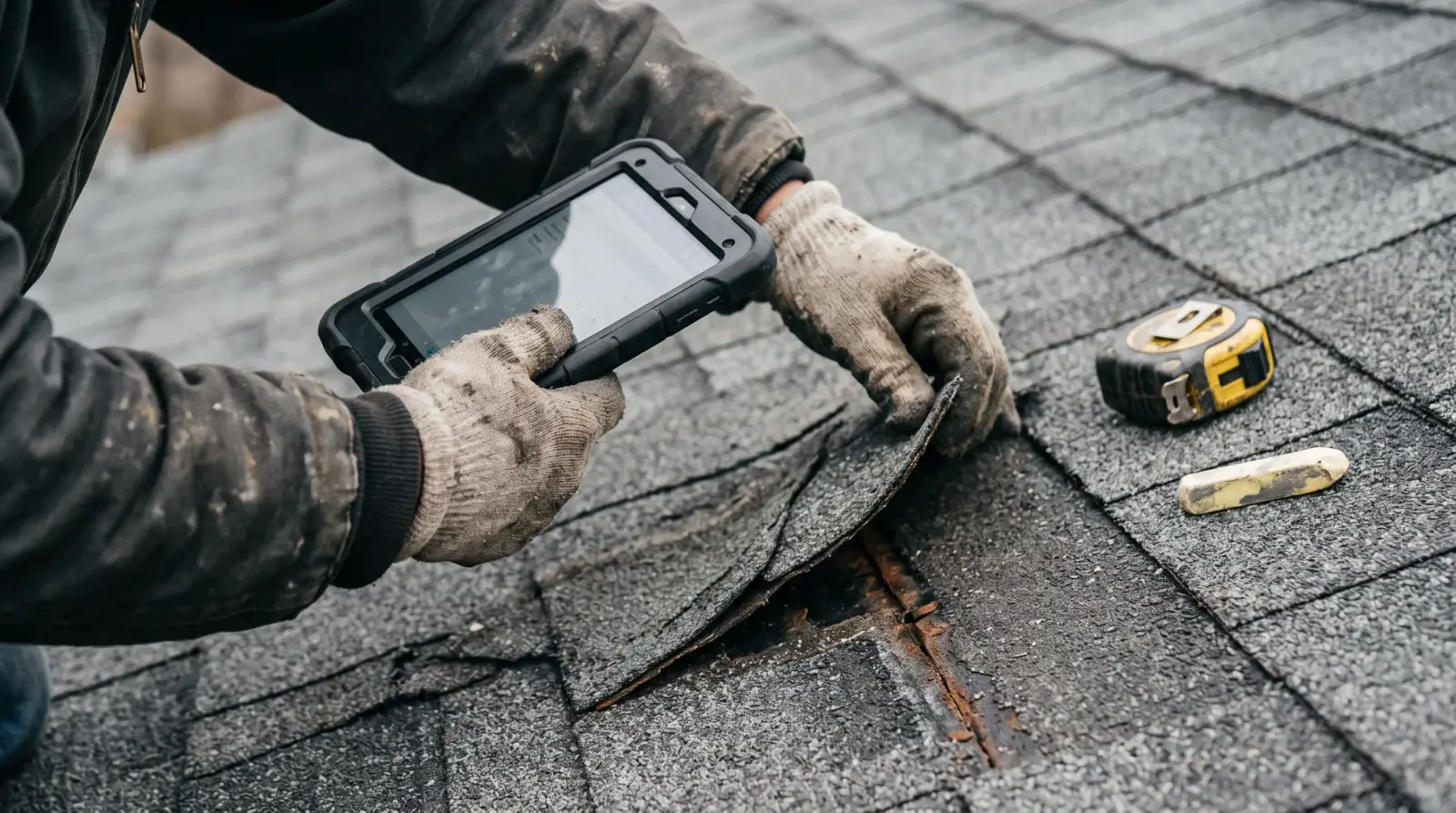
3. Get an independent inspection. This is the step homeowners skip most often and the one that changes outcomes. A professional roof inspection produces what your photos cannot: a written assessment from a licensed roofer identifying what failed, where, and how it connects to the storm. Hail bruising and creased shingles are easy to miss from the ground.
4. Report the claim, once you know it is worth reporting. If the damage is $1,800 and your wind deductible is $2,500, filing accomplishes nothing except putting a claim on your record. When it clears, you do not need an estimate yet. You need a claim number and an adjuster assigned. Keep the description factual: the storm date, what you observed. Do not speculate about cause or extent. That determination is the adjuster’s job.
5. The adjuster inspects. Field adjusters handle roofs, siding, water, fire, and contents. Many are excellent. Very few are roofers, and after a major storm carriers bring in catastrophe adjusters from out of state. Have your contractor there. We routinely meet adjusters on site for storm damage inspections, and two sets of eyes on the same slopes at the same time prevents a lot of downstream disagreement. Ask what they found and what they did not.
6. Review the scope of loss. You should receive a written estimate with line items, pricing, depreciation, and your deductible. Read the whole document, not just the bottom number, and compare it against your contractor’s scope. Gaps are normal and usually involve overlooked items like drip edge, ice and water shield at valleys, ridge vent, or decking. Legitimate omissions get raised as a supplement, supported by documentation.
This is also the point to ask your agent about ordinance or law coverage. A standard settlement restores what was there before the storm. If current code requires something the old roof did not have, that upgrade is a separate question, and whether it is covered depends on whether your policy carries that endorsement. Finding out at the scope stage is far better than finding out when the invoice arrives.
7. Complete the work and collect final payment. On a replacement cost policy, final documentation is what releases the recoverable depreciation. If a mortgage company is named on the check, which is common, build their endorsement and inspection process into your timeline.
Deadlines Your Insurer Has to Meet in Virginia
Almost nobody tells homeowners this part, and it is useful when a claim goes quiet. Virginia’s Rules Governing Unfair Claim Settlement Practices set concrete deadlines for carriers doing business in the Commonwealth:
- Acknowledgment. An insurer must acknowledge receipt of a claim to the claimant within 15 calendar days, unless payment is made within that time.
- Acceptance or denial. Within 15 calendar days after receiving a properly executed proof of loss, you must be told whether the claim is accepted or denied. If the insurer needs more time, it must notify you within those same 15 days and explain why.
- Status updates. If the investigation is not complete, the insurer must send written notice within 45 calendar days of the claim notification, and every 45 calendar days after that, explaining why more time is needed.
- Written denials. Any denial must be in writing with a reasonable written explanation of the basis, referencing the specific policy provision, condition, or exclusion.
The full text is public and worth bookmarking: Virginia Administrative Code 14VAC5-400-60, standards for prompt investigation of claims. A vague verbal “it’s just wear and tear” is not a denial. Ask for the written version every time.
Where a Roofing Contractor Fits, and Where the Law Says We Stop
There is a lot of misleading marketing in this industry after big storms, and some of it crosses a legal line in Virginia. Everything described in the steps above is fair game for a licensed roofer: inspecting, documenting, estimating, walking the roof with the adjuster, and doing the work.
What a contractor cannot do: Virginia Code § 38.2-1845.12 provides that no person other than a licensed public adjuster may accept compensation for investigating or settling claims, prepare, complete, or file an insurance claim on behalf of an insured, or aid or act on behalf of an insured in negotiating for or effecting the settlement of a claim. Attorneys licensed in the Commonwealth are separately excepted.
So if a roofer knocking on your door in Suffolk or Smithfield offers to “handle the whole claim” or “negotiate with your adjuster,” that should give you pause. Be equally skeptical of anyone promising a free roof, guaranteeing approval, or offering to cover your deductible. A contractor absorbing your deductible has to make that money back somewhere, usually in the scope of work or the materials.
Before you sign with anyone, verify their license through the Department of Professional and Occupational Regulation’s public lookup. It takes a minute and tells you the license class, the status, and the expiration. Bucon Roofing holds a Class A license, the top tier, and provides professional documentation to support your insurance claim. We document the damage and price the work accurately. Your carrier decides the rest.
If Your Claim Is Denied or Underpaid
A denial is a position, and positions can rest on incomplete information.
- Start with the written explanation. Virginia requires the carrier to cite the specific provision or exclusion. “This predates the loss,” “this is wear and tear,” and “it falls below your deductible” each point to a different response.
- Request a re-inspection if the dispute is factual rather than about coverage. Send the photos and written report with the request. Re-inspections resolve a fair number of disputes, particularly when hail bruising or lifted shingles were missed on the first pass.
- Check for an appraisal clause. Many policies include one. It resolves disagreements about the amount of a loss, not whether coverage exists, and your policy language controls how it is invoked.
- Contact the Bureau of Insurance. The State Corporation Commission provides free complaint services to Virginia residents who believe a carrier refused a valid claim or unreasonably delayed one. It costs you nothing.
- Consider a licensed public adjuster or attorney if the amount justifies it. Public adjusters are licensed by the SCC, work for you, and charge a fee out of your settlement.
And if the answer is genuinely no, a denied claim does not make a leak stop. We offer financing options for qualified homeowners so a coverage decision does not force you to live with a failing roof.
Frequently Asked Questions
How long do I have to file a roof insurance claim in Virginia?
Your policy sets the deadline, not a single statewide rule. Nearly every homeowners policy requires prompt notice after a loss, and most also limit how long you have to bring suit. Check the “Duties After Loss” section and report promptly. Delay is one of the most common reasons otherwise valid claims run into trouble.
Will filing a roof claim raise my homeowners insurance rates?
It might, depending on your carrier, your claims history, and how they treat weather losses. Some distinguish between a single catastrophic weather claim and a pattern of claims. Ask your agent how yours handles it before you file, particularly if the damage is close to your deductible.
Can I get a full roof replacement if only part of my roof is damaged?
Sometimes. It depends on the extent of the damage, whether matching materials are still available, and what your policy says. If a repair cannot be made without a substantial mismatch, or damage is spread across multiple slopes, replacement may be the appropriate scope. Your carrier makes that call based on documented damage.
Do I have to use the roofing contractor my insurance company recommends?
Generally no. Insurers often maintain preferred vendor programs, but the settlement is for the covered loss and you typically choose who performs the work. Confirm specifics with your carrier and choose based on licensing, local track record, and workmanship.
Not Sure What You Are Dealing With? Start There.
Before you call your insurance company, it helps to know whether you have $900 of damage or $19,000 of damage, whether it is storm-related or age-related, and whether it clears your deductible. That is a roofing question, not an insurance question, and it is the one we can answer.
We inspect roofs across Hampton Roads from our shop in Windsor, and we will tell you straight whether we think you have a claim worth filing.
Schedule your free roofing estimate with Bucon Roofing and get a clear answer about your roof before the claim clock starts running.
This article is general information for Virginia homeowners and is not legal advice or a coverage determination. Coverage and claim decisions are made by your insurance carrier under the terms of your policy.